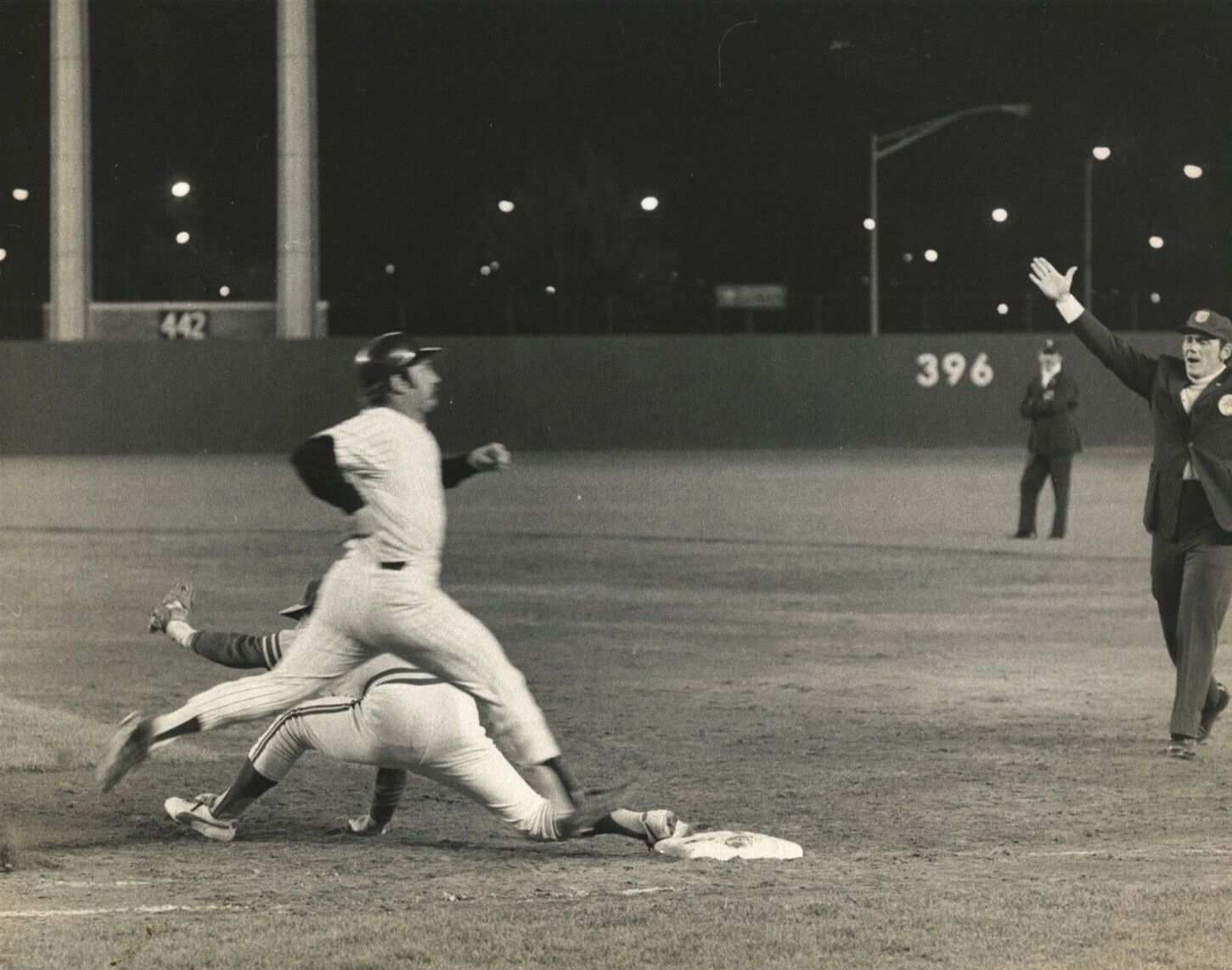
He was the first captain the Yankees named after Lou Gehrig, and the only one the Bronx Zoo ever answered to. Forty-seven years after his death, Thurman Munson is still the standard for what a Yankee leader looks like.
DID YOU KNOW?
Munson is the only catcher in postseason history with at least a .300 batting average (.357), 20 RBIs (22) and 20 runners caught stealing (24) in October play. When the games got biggest, the captain got better.
There is a reason old-timers lower their voice a little when they say his name. Thurman Munson was not the most talented Yankee of his era. He was the one the talented ones followed.
The Yankees took him with the fourth pick of the 1968 draft out of Kent State, and he was in the Bronx barely a year later. By 1970 he was the American League Rookie of the Year, hitting .302. By 1976, George Steinbrenner's club - three years into the new ownership and heading back to the World Series - made it official: Munson was named captain, the first Yankee to hold the title since Gehrig.
The Captain's Seasons
The same year he got the C, Munson won the American League Most Valuable Player award, hitting .302 with 17 home runs and 105 RBIs while handling a pitching staff that carried the Yankees to their first pennant in 12 years. He was a seven-time All-Star and won three straight Gold Gloves from 1973 to 1975, back when winning the position meant nightly wars with Carlton Fisk for the title of the league's best catcher. The rivalry was real, and so was the respect.
What teammates remember is not the hardware. It is that Munson played every day in an era when catchers broke down in August, that he never embarrassed a pitcher, and that his grumpiness was aimed at anyone who gave less than he did. In a clubhouse of feuding egos - the Bronx Zoo years had egos to spare - Munson was the one constant. Reggie Jackson and Billy Martin could feud in the papers. The captain just played.
August 2, 1979
Munson had learned to fly so he could get home to his family in Canton, Ohio, on off days. On the afternoon of August 2, 1979, he was practicing takeoffs and landings at the Akron-Canton airport when his jet came in too low, clipped a tree and fell short of the runway. He was 32 years old.
The Yankees retired his number 15 immediately, on Steinbrenner's order. The day after the crash, the Stadium scoreboard carried words the owner wrote for him: "Our captain and leader has not left us, today, tomorrow, this year, next... Our endeavors will reflect our love and admiration for him." A plaque followed in Monument Park in 1980.
His final season averages sit in the record books: a .292 career average, 113 home runs, 701 RBIs, two championships. But the number that tells the story is that .357 postseason average. Munson saved his best for the games everyone watches.
Why He Still Matters
Every Yankees captain since has been measured against him, and the franchise waited decades - until Derek Jeter - before naming another. When fans argue about what "being a Yankee" means, they are usually describing Thurman Munson without saying his name: show up, play hurt, put the team first, and let somebody else do the talking.
Forty-seven years later, the conversation still starts with the captain.
---
Sources: Baseball-Reference.com (Thurman Munson career and award records) · MLB.com (Munson player page) · Wikipedia (Munson biography, accident and memorial records) · SABR Games Project (1976 ALCS accounts)
KEEP THE CONVERSATION GOING